

When you hear the word "netsuke," many people probably don't know what it means.
Netsuke, netsuke strings, straps... they all have the same general meaning, right? They certainly have similar shapes, and there are many stores and websites that treat them the same, but when you look at their intended use and purpose, you can see the differences.
So, this time, let's get to know the basics of netsuke, and learn about their meaning, history, and origins ! We'll also introduce ways to use them in a modern way, as well as some recommended netsuke! We'll bring you the charm of netsuke!
What is a Netsuke?
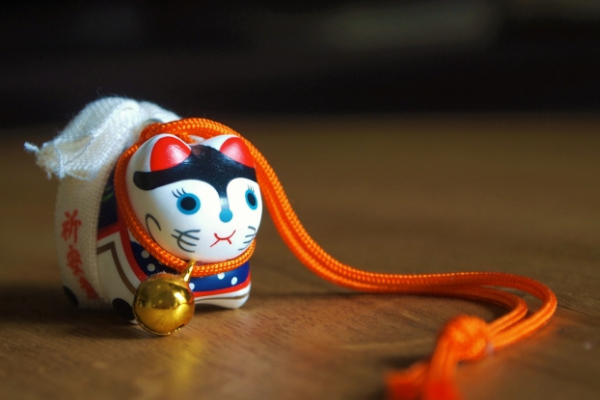 In the days when Japanese clothing did not have pockets, they were used to carry small items. They were attached to the strings of drawstring pouches or inro boxes, and by tucking them in from the bottom to the top of the obi, the netsuke would peek out from above the obi, preventing the pouch or other items from falling out . They were not "decorations" as we would call them today, but rather everyday "tools."
It is unclear when it first came into use, but it can be said that it has been popular since ancient times, as it was depicted in paintings from the Edo period.
At the time, netsuke were used as practical "tools," but as the times changed from Japanese to Western clothing, they gradually began to take on a more decorative or accessory-like role. People began to pay more attention to the designs and motifs, and eventually they began to be treated as works of art .
history
 There are various theories about the origin of the word "netsuke," but the two most commonly mentioned are that it comes from "attaching the roots of a tree" and "attaching it to the base of a string."
Netsuke have a long history and were already widely popular during the Edo period. At first, natural objects such as tree branches and small gourds were used as they were, but as they began to be carved and painted, artisans competed to hone their skills, and their value as decorative items increased to the point that a profession called "netsuke makers" was born to specialize in making them.
However, due to trends and global circumstances, its popularity began to decline rapidly, and only a small number of artisans continued to make high-quality netsuke. Despite its popularity overseas, it remained obscured in Japan for a while, but with the spread of mobile phones and other factors, straps became popular, and the original popularity of netsuke has been revived. Now it is an item that is attracting attention again!
Although the term "netsuke" is used broadly, there are many different types, which can be roughly divided into four categories.
 |
 |
 |
 |
 |
 |
 |
 |
[Mask Netsuke]: Masks based on the traditional masks used in performing arts such as Noh, Kyogen, and Gigaku.
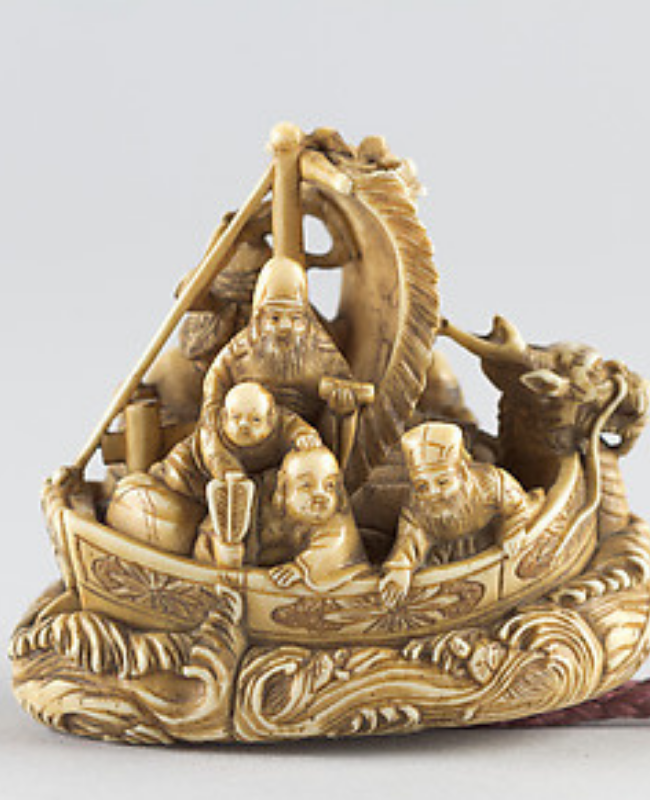
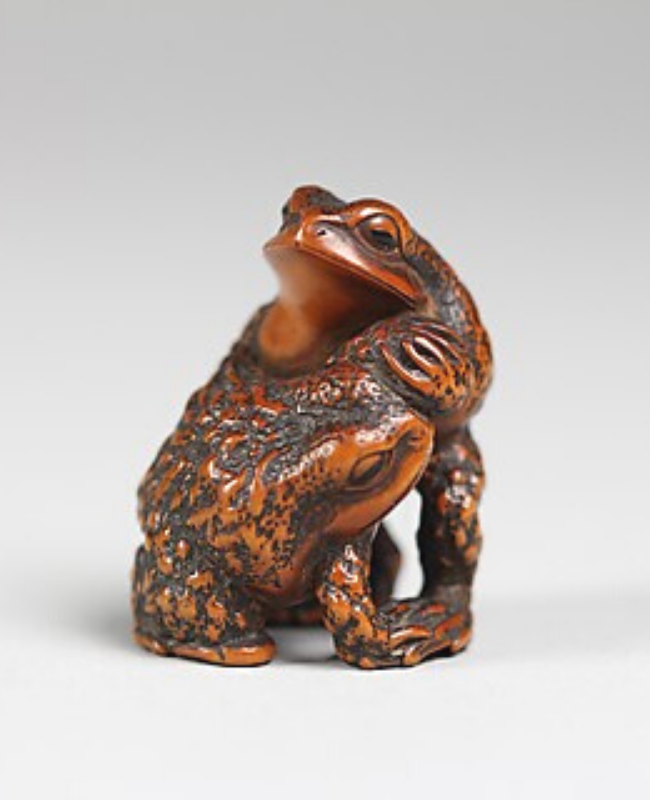
Among them, the most popular are katabori netsuke ! Many people carried around netsuke in the shape of gods like the Seven Lucky Gods, or auspicious animals like frogs, turtles, cranes, and elephants, and they became mainstream. They may have come to be used as talismans. Each type is made by the skilled artisans, which is why they became popular as works of art.
Due to their beauty and high level of craftsmanship, they are popular and highly regarded overseas as a form of Japanese art , alongside ukiyo-e prints, and are affectionately known as "netsuke." As they are popular all over the world, your netsuke may be surprisingly valuable!
What's the difference between a strap and a netsuke?
 Charms attached to cell phones, wallets, etc. with netsuke strings are often referred to as "netsuke," but actually "netsuke" and "strap" are different things.
The strap itself serves as an accessory, but the netsuke has a purpose as a tool! Nowadays, the difference between the two seems to be disappearing, and it seems that all types are often referred to as "netsuke." Of course, they are also popular for formal use with kimonos, and designs are constantly evolving.
Netsuke were one of the two most popular decorative items in the Edo period, along with kanzashi (ornamental hairpins). In modern times, they have evolved into works of art, with motifs, designs, and materials diversifying, and new materials being explored.
Now, we recommend new netsuke!
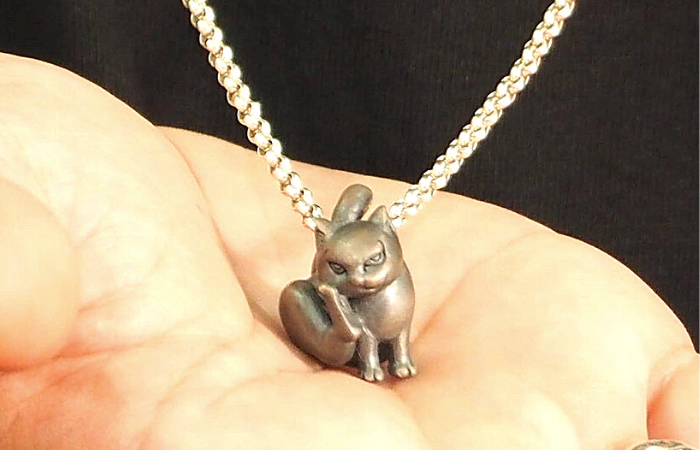 Netsuke continues to evolve, taking into account its history and usage, both past and present. It pursues new things while preserving and passing on the good old Japanese traditions. Netsuke continues to propose forms that are in tune with the modern era.
Among them, the most popular is "The Ich Netsuke," which can also be enjoyed as a pendant top . Based on the fusion of traditional design and accessories , all of the items are original designs and are handmade by artisans. 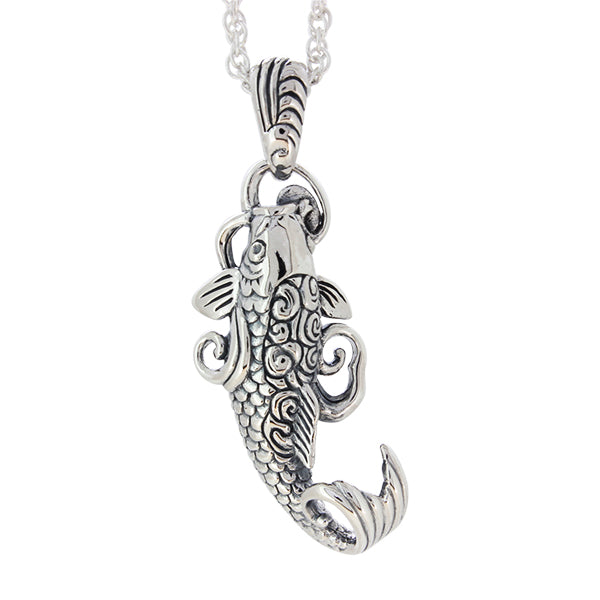
[Toryumon Netsuke - Carp Ascending a Waterfall]
This netsuke depicts a carp climbing a waterfall. It is a substantial silver accessory. 
[Battle Armor Poisonous Insect Netsuke - Bee]
The image of a bee clad in armor and its sharp stinger shining has been depicted on this silver netsuke, resembling a warrior going into battle.
I've introduced two of my recommendations, but what do you think? They're so beautiful! They're so delicate and realistic that even people who aren't familiar with netsuke will want to wear them! They're silver accessories that can be used as pendants as well as netsuke.
In addition to these, we also carry a wide range of other items, including traditional bell netsuke and a wide variety of motifs. 
Finally.
What did you think? We've talked about netsuke. Some of you may have heard about them for the first time. We hope we've been able to convey the appeal of netsuke, along with their uses and history.
Bringing tradition into the modern world. And creating netsuke that shines especially now.
The Ichi has a selection of recommended items that bring netsuke back to life in the modern era.
Please come and visit us for shopping reference.
We look forward to seeing you.






![Cherry Blossoms Every Moment ~ Cherry Blossoms Remaining ~ [Ring]](http://wargo.jp/cdn/shop/products/13753_55151ea2-0d41-454e-93ac-c246d62e293b_{width}x.jpg?v=1675845467)
![Cherry Blossoms Every Moment ~ Cherry Blossoms Remaining ~ [Ring]](http://wargo.jp/cdn/shop/products/13753_1_f709ad71-890c-442f-b1dc-3fe07427222d_{width}x.jpg?v=1675845465)
![[The Ichi(座市)]編集部のオススメ!今週の再入荷商品](http://wargo.jp/cdn/shop/collections/shopify_{width}x.jpg?v=1678940879)
![Chrysanthemum earrings (kikka earrings) [Delivery time: approximately 4 months]](http://wargo.jp/cdn/shop/products/1000200360002_{width}x.jpg?v=1678944363)
![[The Ichi(座市)]編集部のオススメ!水引細工特集](http://wargo.jp/cdn/shop/collections/Banner_Mizuhiki_{width}x.jpg?v=1685944077)
![[The Ichi(座市)]編集部のオススメ!和柄ワッペン特集](http://wargo.jp/cdn/shop/collections/Banner_Embroidered-badges_{width}x.jpg?v=1685695236)